Multifamily Commercial Properties in Austin - Apartment Complexes and Build-to-Rent
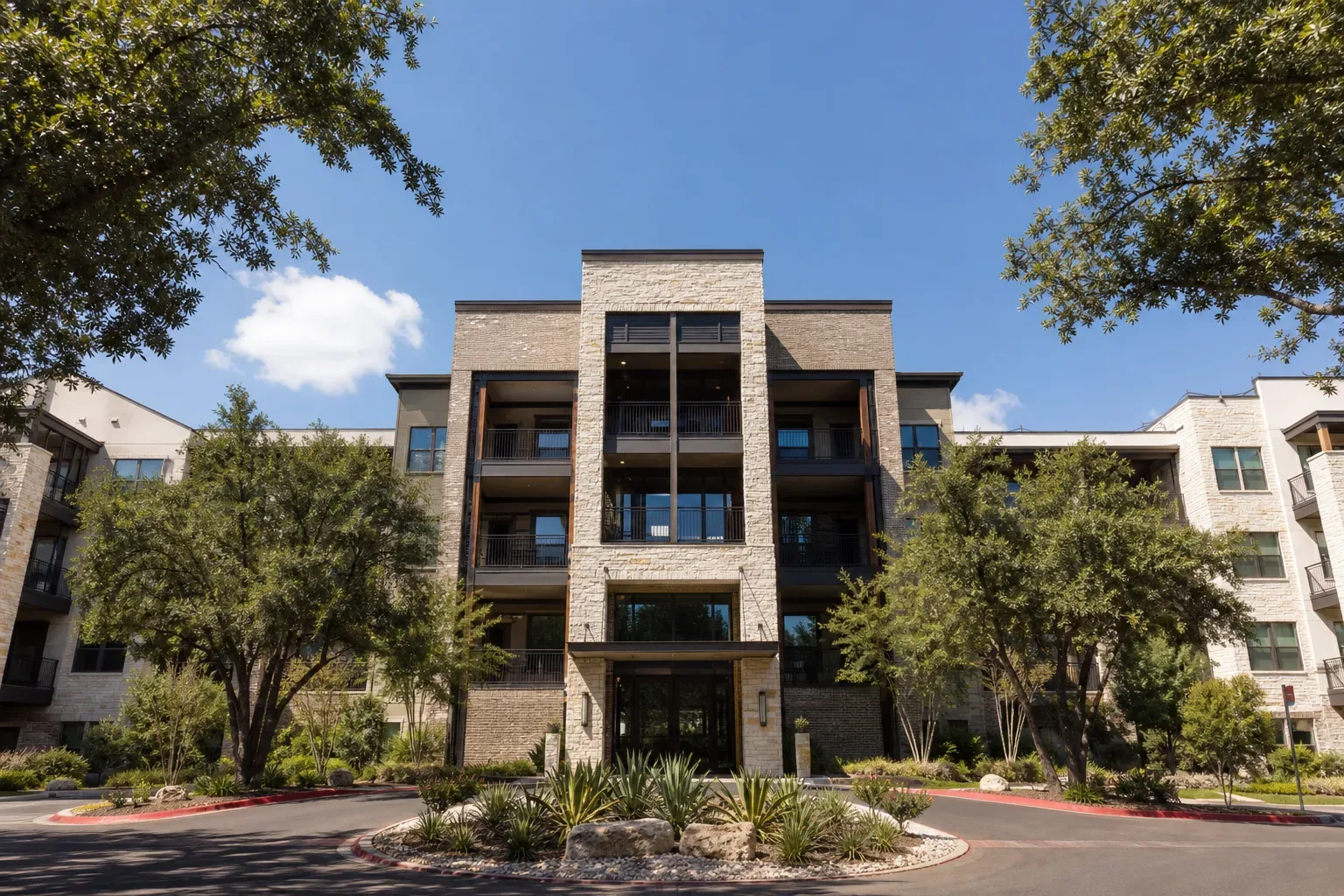
A multifamily commercial property Austin TX investor pursues is not simply a large apartment building. Under conventional commercial real estate classification, any residential property with five or more units crosses into commercial territory, which changes how lenders underwrite it, how appraisers value it, and how brokers market it. That threshold matters because financing terms, cap rate benchmarks, and due diligence processes all shift once you move beyond the four-unit cutoff.
Austin's roughly 2.3 million residents in the greater Austin–Round Rock–Georgetown MSA have made the metro one of the most actively tracked multifamily markets in the country. PwC and ULI's Emerging Trends in Real Estate consistently rank Austin among the top 10 U.S. markets for commercial real estate investment activity. That sustained attention reflects both the population base and the structural undersupply of workforce housing across Travis, Williamson, and Hays counties.
How Multifamily Assets Are Classified as Commercial Real Estate
The five-unit threshold is the legal and financial dividing line. A duplex or fourplex uses residential loan products with terms tied to personal credit scores and debt-to-income ratios. A 10-unit or 200-unit complex uses commercial debt, where underwriting focuses on net operating income, debt service coverage ratios, and the asset's own financial performance rather than the borrower's personal income.
Within the commercial multifamily category, Austin investors typically encounter three asset types. Garden-style complexes, mid-rise buildings in walkable submarkets like Mueller or East Riverside, and purpose-built build-to-rent single-family communities in suburban corridors like Pflugerville or Kyle each carry distinct operating profiles and buyer pools.
Build-to-Rent as a Distinct Product Type
Build-to-rent, commonly abbreviated BTR, refers to single-family or townhome communities constructed specifically for rental occupancy rather than for-sale disposition. The product has grown significantly in the Austin suburbs because it targets households that want yard space and garage parking but cannot qualify for or choose not to pursue homeownership. Operators run these communities with centralized property management, which creates efficiencies that traditional single-family rental portfolios lack.
BTR communities in the Austin metro typically range from 80 to 300 units. Land cost and yield compression in infill locations push most new development to outer ring submarkets. Investors underwrite these assets much like conventional multifamily, though operating expense ratios tend to run slightly higher because exterior maintenance and landscaping costs scale with individual units rather than shared corridors.
Multifamily Cap Rates and Valuation in Austin
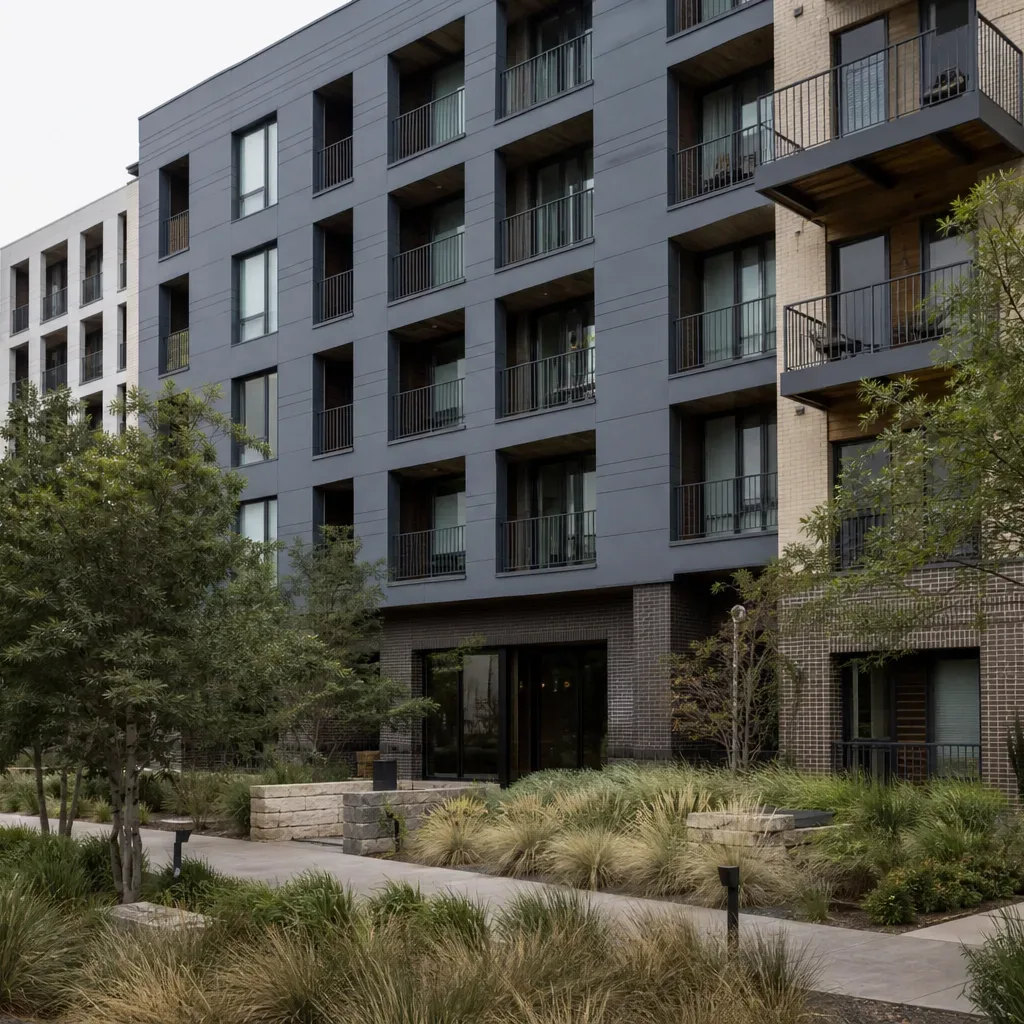
Multifamily cap rates in the Austin metro currently range from 4.5% to 6.0%, with the spread reflecting the difference between stabilized Class A assets and value-add properties that carry occupancy or deferred maintenance risk. Class A assets in supply-constrained submarkets like the Domain or West Campus compress toward the lower end of that range. Older 1980s-vintage complexes in transitional neighborhoods price closer to 5.5%–6.0% where investors are underwriting rent growth and renovation upside.
The broader Austin commercial real estate cap rate environment runs from 5.0% to 7.5% depending on asset class and location, with industrial and multifamily generally sitting below office and retail on that spectrum. Multifamily's position at the lower end of the cap rate range reflects its income stability relative to single-tenant commercial assets, which carry more concentrated lease expiration risk.
How Net Operating Income Drives Valuation
Because commercial multifamily is valued on income rather than comparable sales alone, every dollar of NOI improvement produces a direct and calculable increase in asset value. At a 5.0% cap rate, adding $50,000 in annual NOI through rent increases or expense reductions increases the property's indicated value by $1 million. That math is why value-add buyers focus on below-market rents, utility bill-back programs, and operational inefficiencies before closing.
Austin's rent trajectory supports that underwriting logic. Demand from tech sector employees at companies including Apple, Tesla, Google, Meta, and Oracle has created durable absorption even during periods of elevated new supply. Investors modeling five-year holds typically stress-test rent growth assumptions against pipeline data from CoStar or CBRE before finalizing acquisition pricing.

The Acquisition Process for Austin Multifamily Assets
Commercial multifamily transactions in Austin follow a structured process that differs meaningfully from residential closings. After a letter of intent establishes the basic economic terms, buyers enter a due diligence period that typically runs 30 to 60 days for most transactions, with larger or more complex assets sometimes requiring up to 90 days. During that window, buyers review rent rolls, historical financials, deferred maintenance reports, and environmental assessments.
Phase I environmental site assessments are standard on any deal. For older assets, buyers also commission property condition assessments that quantify near-term capital expenditure requirements for roofing, HVAC, plumbing, and common area systems. That capital expenditure number feeds directly into the acquisition model and often becomes a price negotiation lever.
Financing Structures for Multifamily Commercial Assets
Agency debt through Fannie Mae or Freddie Mac remains the most common permanent financing structure for stabilized multifamily assets with five or more units. These programs offer fixed-rate terms, non-recourse structures on larger loans, and competitive leverage, typically 65%–75% loan-to-value on stabilized assets. Bridge loans serve acquisitions with occupancy below agency stabilization thresholds, usually 90% occupancy for 90 days.
Local and regional banks remain active in the Austin multifamily market for smaller deal sizes below $5 million. CMBS execution becomes relevant at higher loan amounts. Buyers using 1031 exchange proceeds face hard deadlines: 45 days from the sale of the relinquished property to identify replacement assets, and 180 days to close. Both windows run concurrently from the disposition date, so buyers typically begin sourcing replacement inventory before the prior asset closes.
Lease Structures and Operating Considerations
Individual apartment leases within a multifamily commercial asset are residential leases, not commercial ones. However, the asset itself is governed by commercial financing, commercial insurance requirements, and commercial property management standards. Owners of larger Austin complexes typically engage third-party property management firms that charge 4%–8% of gross collected rents in exchange for leasing, maintenance coordination, and financial reporting.
Expense control is as important as revenue in multifamily operations. Property taxes in Travis County have increased substantially over the past decade, and insurance premiums have risen across Texas following broader property casualty trends. Investors underwriting Austin multifamily assets should model current tax assessed values and verify insurance quotes from multiple carriers before finalizing pro forma operating expenses.
Submarkets Worth Analyzing
Not all Austin multifamily submarkets carry the same risk-return profile. The Domain submarket benefits from walkable retail density and proximity to major tech campuses, which supports premium rents and low vacancy. East Austin and Mueller attract renters who prioritize urban access, and both corridors have seen consistent rent performance despite new supply additions.
South Austin along the South Congress and South Lamar corridors draws lifestyle renters willing to pay for access to the city's food and entertainment density. Suburban submarkets in Round Rock, Cedar Park, and Kyle offer higher initial yields with longer lease-up timelines on new projects. Georgetown and Hutto have attracted BTR development specifically because land costs remain below the thresholds that make infill deals pencil.
Opportunity Zone designations concentrated in Eastern Travis County and parts of the urban core create a separate investment consideration for long-hold buyers who want to defer and potentially reduce capital gains taxes. Those program rules operate under IRS guidelines; investors should work with a qualified tax advisor before structuring acquisitions around Opportunity Zone benefits.
Frequently Asked Questions
What Qualifies as a Multifamily Apartment Complex Commercial Property in Austin?
Any residential rental property with five or more units is classified as commercial real estate in Austin and across the U.S. generally. That threshold shifts how the asset is financed, appraised, and managed. Lenders underwrite these properties based on net operating income and debt service coverage rather than the borrower's personal income, and cap rates in Austin's multifamily sector currently range from 4.5% to 6.0% depending on asset quality and location.
How Does Negotiating Rent on a Commercial Property in Austin Work for Multifamily Assets?
For the individual apartment leases within a multifamily asset, rents are typically set by the property management team based on market comps, occupancy levels, and lease expiration timing rather than through direct negotiation with each resident. At the acquisition level, buyers negotiate the overall economics with the seller through a letter of intent that establishes purchase price, due diligence period, and earnest money. Buyers frequently use below-market rents documented in the rent roll as a negotiating lever to adjust acquisition price or secure seller credits for planned renovations.
What Is Build-to-rent and How Does It Differ from Traditional Apartment Investing in Austin?
Build-to-rent refers to communities of single-family homes or townhomes constructed specifically to be leased rather than sold. In the Austin metro, BTR communities are concentrated in suburban corridors like Pflugerville, Kyle, and Georgetown where land costs allow the product to pencil. Unlike traditional apartment complexes, BTR assets carry higher per-unit exterior maintenance costs because each unit has its own outdoor space, but they attract a different renter demographic that values yard space and garage parking without purchasing a home.
What Cap Rates Should I Expect for Multifamily Assets in the Austin Metro?
Austin multifamily cap rates currently range from 4.5% to 6.0%. Stabilized Class A assets in supply-constrained locations like the Domain or West Campus compress toward the lower end of that range, while value-add properties with occupancy risk or deferred maintenance price closer to 5.5%–6.0%. These figures sit at the lower end of the broader Austin commercial real estate cap rate range of 5.0%–7.5%, reflecting the income stability that multifamily offers compared to office or retail assets.
How Long Does the Due Diligence Period Typically Last for an Austin Multifamily Acquisition?
Most Austin commercial multifamily transactions include a due diligence period of 30 to 60 days. Larger or more complex assets with significant capital needs or complicated ownership structures may require up to 90 days. During that window, buyers review rent rolls, historical operating statements, property condition assessments, and Phase I environmental reports. The findings from those inspections often become the basis for price renegotiation before the period closes.