1031 Exchange Opportunities in Austin Commercial Real Estate

A 1031 exchange lets a commercial real estate investor sell an appreciated asset and defer federal capital gains taxes by reinvesting the proceeds into a like-kind replacement property. For Austin investors sitting on significant appreciation, that deferral can preserve hundreds of thousands of dollars of capital that stays working in the market rather than flowing to the IRS. The mechanism is grounded in Section 1031 of the Internal Revenue Code and has been a core tool for professional investors for decades.
How Does 1031 Exchange Work - Austin Commercial
The exchange follows a strict sequence: sell the relinquished property, engage a qualified intermediary before closing to hold the proceeds, identify one or more replacement properties within the identification window, and close on the replacement within the closing window. Both deadlines run from the date the relinquished property sale closes. Miss either window and the full gain becomes taxable in that calendar year.
The qualified intermediary, sometimes called a QI or accommodator, is not optional. The seller cannot take constructive receipt of the proceeds even briefly. Austin-based investors typically retain a QI with experience in Texas transactions, since state-specific title and closing timelines affect how much buffer you have within each deadline window.
Like-kind is broader than most investors expect for commercial property. An Austin office building can exchange into a retail strip center, an industrial warehouse, or a multifamily asset of five or more units. Raw land and improved property also qualify against each other, which opens acquisition strategies in fast-growing Austin submarkets where land plays are increasingly common.
1031 Exchange Commercial Real Estate Austin - Market Context
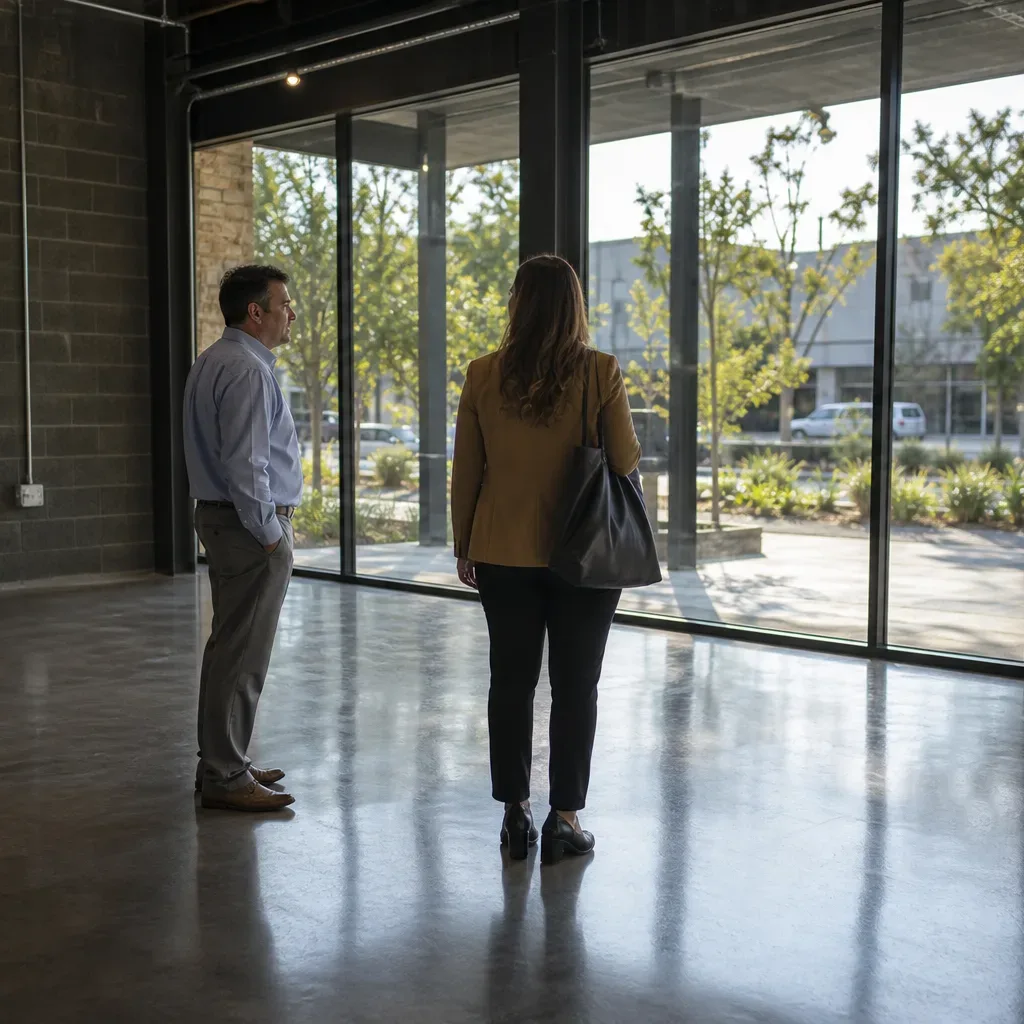
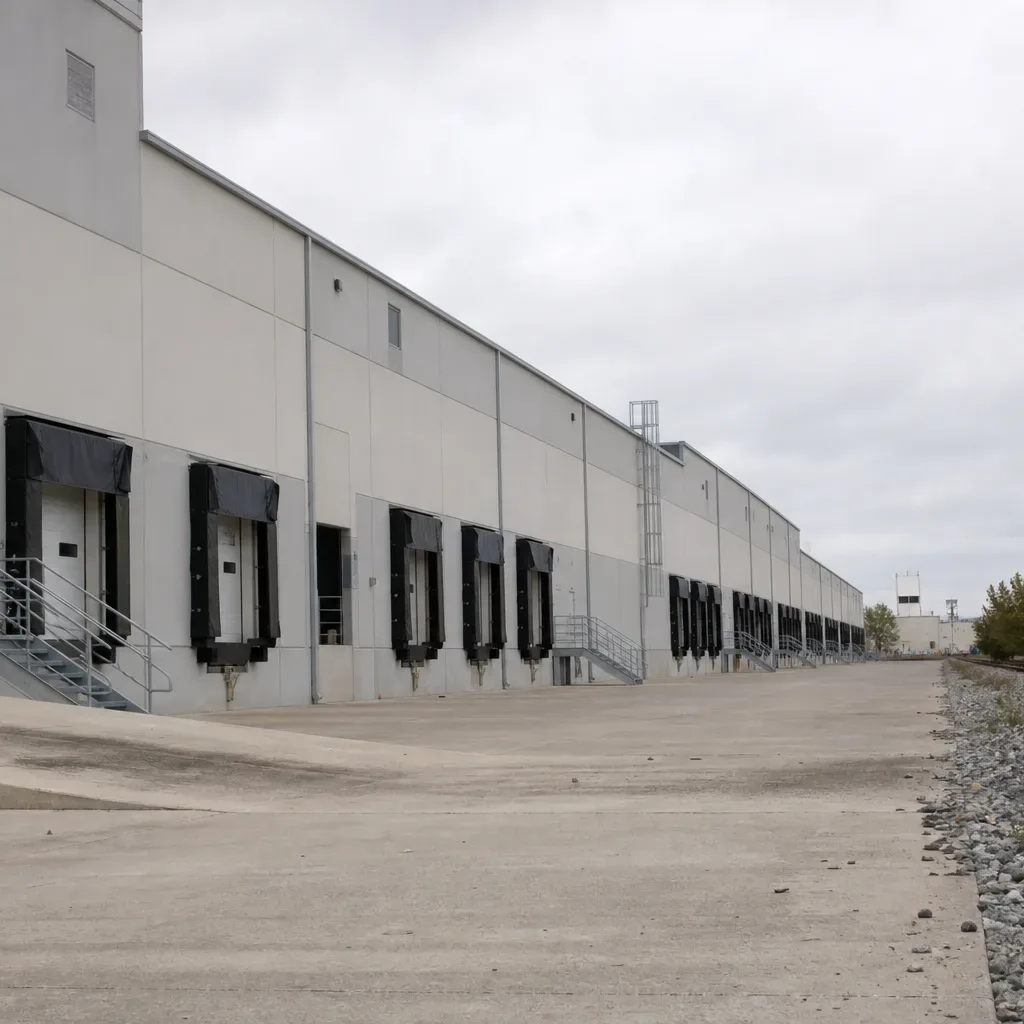
Austin's commercial market gives investors a deep inventory of potential replacement assets. The metro holds approximately 60–70 million square feet of total office inventory and 100–120 million square feet of industrial space, with active development pipelines in both categories. That scale means a replacement property search rarely has to leave the metro area to satisfy like-kind requirements.
Cap rates across Austin commercial assets currently run 5.0%–7.5% depending on asset class and location, with office and retail skewing toward the higher end and industrial and multifamily sitting lower. Multifamily cap rates in the Austin metro range from 4.5%–6.0%, reflecting variation between stabilized Class A product and value-add assets. Those figures matter when structuring an exchange because the replacement property must be of equal or greater value to defer the entire gain.
Major tech employers including Apple, Tesla, Samsung, Google, Meta, and Oracle have built significant presences in the Austin metro, collectively generating occupier demand that supports absorption across office and industrial submarkets. That occupier base anchors the long-term rent thesis for investors trading into net-leased assets as exchange replacements.
Defer Capital Gains - 1031 Exchange Austin Commercial
Deferral means the tax obligation does not disappear; it carries forward into the basis of the replacement property until a future taxable sale or estate step-up at death. The practical benefit is time and compounding: capital that would have gone to taxes stays invested, generating returns across the holding period of the next asset.
Consider the math at a high level. An investor holds an Austin retail property with substantial appreciation. Without an exchange, combined federal and Texas-related taxes on the gain reduce the investable proceeds significantly. With a properly executed exchange, the full equity rolls into the replacement asset.
Austin's industrial rents of $10–$18 per square foot per year on a NNN basis, or retail rents of $25–$55 per square foot per year NNN on well-located corridors, mean a larger asset base translates directly into higher annual income.
Partial exchanges are also possible. If the investor acquires a replacement property of slightly lesser value, the difference, called boot, is taxable in the year of the exchange. Careful sizing of the replacement acquisition, often with broker guidance on Austin submarket pricing, keeps boot to zero.
Identifying Replacement Properties in Austin
The three-property rule allows an investor to identify up to three replacement properties of any value. The 200% rule allows more than three properties, provided their combined value does not exceed 200% of the relinquished property's sale price. Most Austin transactions use the three-property rule, identifying viable assets with some redundancy in case one falls through during the due diligence period.
Standard commercial due diligence in Austin runs 30–60 days for most transactions. Larger or more complex assets can require up to 90 days. That timeline sits comfortably inside the closing window when the exchange is set up correctly, but it underscores why replacement properties should be identified and under letter of intent before the relinquished property closes, not after.
Austin Submarket Targets Worth Evaluating
Eastern Travis County carries federally designated Opportunity Zone parcels, which can stack with 1031 treatment in certain structures. The Domain and North Austin corridors show strong industrial and office absorption. Pflugerville, Round Rock, and Georgetown, all within the 2.3-million-person Austin–Round Rock–Georgetown MSA, offer industrial product at competitive price points relative to infill locations.
Class A office in the CBD and Domain submarkets commands $45–$65 per square foot per year on a full-service gross basis. Class B assets range from $28–$44 per square foot annually. Investors targeting net-leased office replacement properties often find Class B suburban product offers better yield with manageable capital expenditure risk on acquisition.
Structuring the Exchange - Practical Steps
Start with a broker opinion of value on the relinquished property before listing. That figure drives the replacement property sizing and determines how much equity needs to move to achieve full deferral. Engage the QI at the same time, not after you are under contract, since the assignment of the purchase agreement to the QI must occur before closing.
Work with a 1031-experienced commercial broker in Austin who can run parallel searches across asset classes. The goal is to have at least two replacement candidates identified and term-sheeted before the relinquished property closes. Austin's transaction volume gives enough deal flow to support that parallel process across most price points.
Tax counsel and the QI should review the replacement property's lease structure. A NNN lease, where the tenant pays base rent plus property taxes, insurance, and maintenance costs separately, produces cleaner income and reduces landlord liability. A gross lease, where the landlord covers operating expenses and the tenant pays a single all-inclusive rent, changes the net cash flow picture and affects the yield calculation on the replacement asset.
Documentation and Closing Checklist
The identification notice must be in writing, signed, and delivered to the QI or another qualified party before midnight on the last day of the identification window. Verbal identification does not count. The replacement property contract should name the QI as the buyer or include an assignment clause, and the closing statement should reflect exchange proceeds flowing from the QI rather than directly from the investor.
Austin title companies process a high volume of 1031 closings and are generally familiar with the escrow mechanics, but confirming that the specific title officer has handled exchange transactions is a reasonable due diligence step on a large deal.
Frequently Asked Questions
1031 Exchange Commercial Real Estate Austin
A 1031 exchange in Austin commercial real estate allows investors to sell an appreciated property and defer capital gains taxes by reinvesting proceeds into a like-kind replacement asset. Austin's deep inventory of office, industrial, retail, and multifamily properties, spread across roughly 60–70 million square feet of office space and 100–120 million square feet of industrial inventory, gives exchanging investors a wide range of qualifying replacement targets within the metro.
How Does 1031 Exchange Work Austin Commercial?
After selling the relinquished property, a qualified intermediary holds the proceeds. The investor must identify replacement properties within the identification window and close on the replacement within the closing window, both running from the sale date. Austin commercial transactions typically carry a 30–60 day due diligence period, which fits within the closing window when the exchange is structured in advance. Missing either deadline makes the full gain taxable in that year.
Defer Capital Gains 1031 Exchange Austin Commercial
A properly executed 1031 exchange defers the federal capital gains tax liability by carrying it forward into the basis of the replacement property rather than triggering it at sale. For Austin investors holding appreciated assets, full deferral requires the replacement property to be of equal or greater value than the relinquished property. Any shortfall, called boot, is taxable in the year of the exchange.
What Types of Austin Commercial Properties Qualify for a 1031 Exchange?
Most income-producing commercial properties qualify, including office buildings, retail centers, industrial warehouses, multifamily properties of five or more units, and raw land held for investment. An Austin office asset can exchange into an industrial property, a retail strip center, or a net-leased multifamily asset, as long as both properties are held for investment or productive use in a trade or business.
Do I Need a Qualified Intermediary for a 1031 Exchange in Austin?
Yes. A qualified intermediary must be engaged before the relinquished property closes, and the sale proceeds must flow through the QI rather than to the investor directly. Taking constructive receipt of the funds, even briefly, disqualifies the exchange. Austin-based QIs familiar with Texas title and closing practices are generally preferred because local transaction timelines can affect how much buffer exists within the required exchange windows.